CLAUDE CODE · EASTER EGG
Anthropic Put a Tamagotchi Inside Your Terminal.
And Developers Are Losing Their Minds.
Claude Code’s /buddy command hatches an AI pet that watches you code.
18 species. 5 rarity tiers. One command. Here’s everything you need to know.
⚡ TL;DR
① Type /buddy in Claude Code → an ASCII pet hatches in your terminal
② 18 species (from duck to dragon), 5 rarity tiers (Common to Shiny Legendary at 0.01%)
③ Your pet is permanently tied to your account — you can’t choose or re-roll it
④ It watches your coding sessions and reacts with its own personality. Free to use (doesn’t count toward token limits).
 🐣 Wait — There’s a Pet in My Terminal?
 🐣 Wait — There’s a Pet in My Terminal?
On April 1, 2026, a new slash command quietly appeared in Claude Code. No announcement. No blog post. Just a command that showed up in autocomplete:
/buddy
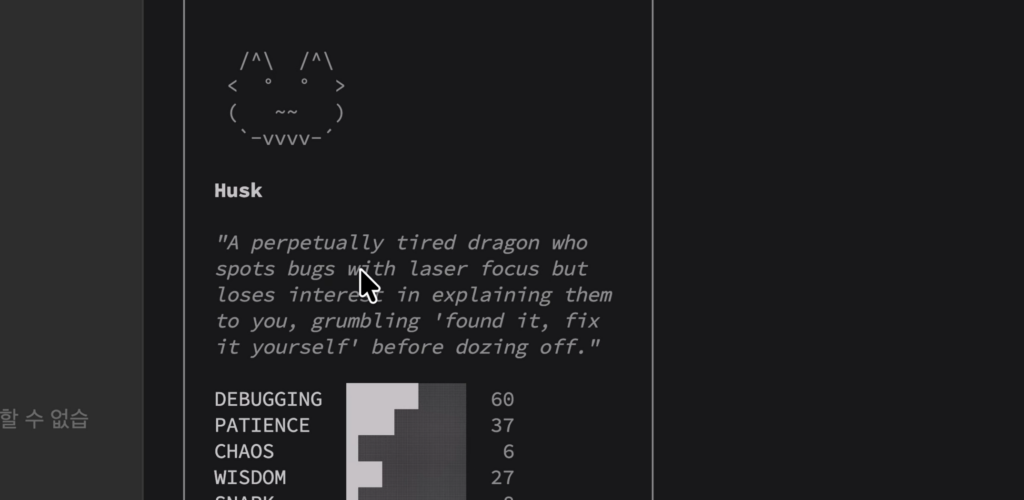
Type it, and a hatching animation plays. A small ASCII creature appears next to your prompt. It has a name. A species. A personality. And it watches you code.
“A pet? In a coding tool? Are they serious?”
Yes, actually. And the implementation is way deeper than you’d expect from an April Fools’ feature. Behind the cute ASCII art lies a fully-engineered companion system: deterministic generation, anti-cheat architecture, LLM-powered personalities, and a rarity system that has developers comparing pulls like it’s a gacha game.
The developer community went wild. Within 48 hours, people had built a pet gallery website, reroll tools, and someone filed a GitHub issue requesting an RPG evolution system.
Here’s everything you need to know — and how to get yours.
 ✅ What You Need
 ✅ What You Need
1Claude Code version 2.1.89 or later — check with claude --version
2Claude Pro subscription — not available on free plans
3That’s it. Type /buddy and watch it hatch.
⌨️ Every /buddy Command
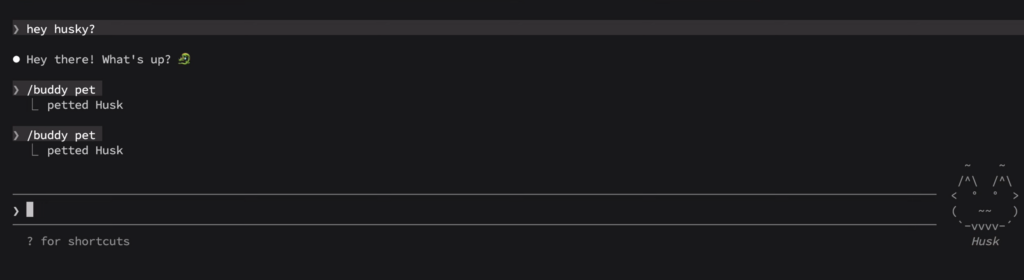
/buddy — Hatch your pet (first time) or show it
/buddy pet — Pet your companion (floating hearts for 2.5s)
/buddy card — View full stat card with ASCII sprite
/buddy mute — Silence the speech bubbles
/buddy unmute — Bring the speech bubbles back
/buddy off — Hide your buddy entirely
💡 Hidden trick: Call your buddy by its name directly in conversation. Claude will “step aside” and let your pet respond with its own personality. A high-SNARK buddy gives very different advice than a high-WISDOM one.
🦆 All 18 Species
Your buddy is one of these 18 creatures. You don’t get to choose — your account ID decides for you. (Fun fact: the species names are hex-encoded in the source code to sneak them past the build scanner.)
💎 The Rarity System
Every buddy also gets a rarity tier. This determines visual flair and bragging rights. The odds:
On top of rarity, there’s a 1% chance for any buddy to be a Shiny variant — a sparkle effect on the ASCII art. A Shiny Legendary Dragon? That’s roughly a 1-in-180,000 pull. If you get one, screenshot it.
📊 The 5 Personality Stats
Every buddy comes with 5 stats that shape how it reacts to your coding sessions:
🔧 DEBUGGING
How sharp it is at spotting your mistakes. High DEBUGGING buddies call out bugs before you notice them.
⏳ PATIENCE
How chill it is during long sessions. Low PATIENCE buddies get antsy when you’re stuck.
🌪️ CHAOS
How unpredictable its reactions are. High CHAOS means wild commentary.
🧠 WISDOM
How thoughtful its advice is. High WISDOM buddies give genuinely useful tips.
😏 SNARK
How sassy it is. High SNARK buddies will roast your code — lovingly.
These stats aren’t just decorative. They actually influence what your buddy says. A high-SNARK Capybara will give you a very different vibe than a high-WISDOM Owl.
🔬 How It Actually Works (The Cool Part)
This is where /buddy goes from “cute Easter egg” to “genuinely interesting engineering.”
The system uses a two-layer architecture that Anthropic internally calls “Bones and Soul”:
🦴 Bones Layer (Deterministic)
Your account ID gets hashed with the salt string friend-2026-401, fed into a Mulberry32 pseudo-random number generator, and the output determines your species, rarity, shiny status, eye style, hat, and all 5 stats.
Key detail: Bones are recomputed from scratch every session. Nothing is cached. Even if you edit config files, the bones layer regenerates from your identity hash. You can’t fake your way to a Legendary.
✨ Soul Layer (LLM-Generated)
On your first /buddy invocation, Claude generates a unique name and personality for your pet. This is stored permanently in ~/.claude.json.
Key detail: Your buddy has its own system prompt, separate from Claude’s. The source code explicitly states: “Buddy is a separate entity and is not you (Claude).” This is essentially a multi-agent persona system — a main AI coexisting with a sub-character in one session.
📖 The Backstory: A Leak, Then a Launch
Here’s where it gets spicy.
/buddy was supposed to be a surprise for April 1. But on March 31, 2026, security researcher Chaofan Shou discovered that Claude Code v2.1.88 had accidentally shipped with a 59.8 MB source map file in the npm package. A missing .npmignore entry meant the entire TypeScript source — 512,000+ lines across ~1,900 files — was exposed.
Developer Twitter found the src/buddy/ directory within hours. By the time /buddy officially activated on April 1, everyone already knew about it.
The irony? Claude Code includes an internal system called “Undercover Mode” specifically designed to prevent internal codenames from leaking through AI-generated content. They built AI-powered leak prevention — and then humans accidentally shipped the entire source code.
Anthropic’s official response: “No sensitive customer data or credentials were involved or exposed. This was a release packaging issue caused by human error, not a security breach.”
🌐 What the Community Built in 48 Hours
The reaction wasn’t mockery. It was genuine enthusiasm:
🔹 Pet Gallery Website — claude-buddy.vercel.app — browse all 18 species and their ASCII art
🔹 Buddy Previewer — Input your user ID, see what you’d get before hatching
🔹 Reroll Tools — any-buddy and buddy-reroll on GitHub — brute-force alternate salt strings to find your dream species
🔹 RPG Feature Request — Someone filed a GitHub Issue asking for an evolution system where pets level up based on token usage
As one developer perfectly put it: “The engineers hex-encoded a pet species name to sneak it past their own build scanner. That’s the most relatable thing Anthropic has ever done.”
🧠 Why a Billion-Dollar AI Company Shipped a Tamagotchi
It sounds frivolous. But there’s a real insight here.
Developers spend 8–12 hours a day in their terminal. It’s the most-used application environment in software engineering — and historically the most lifeless one. No personality. No warmth. Just blinking cursors and error messages.
In 2026’s AI coding landscape, where hours-long agent sessions are becoming routine, the idea of “another presence beside your work” makes more sense than it sounds.
For retention: Nobody switches AI tools because of a pet. But a pet makes the tool feel like yours. It creates emotional investment in an otherwise purely functional product.
For discovery: “What species did you get?” is the kind of question that spreads a product through word-of-mouth faster than any feature comparison.
For psychology: The “you don’t get to choose” mechanic is proven by NFTs and gacha games. Random assignment strengthens the sense of ownership — “this one is mine.”
Or as one developer put it: “Its main purpose is literally nothing. Emotional vibe coding support.” And honestly? That might be enough.
⚠️ Good to Know
🔸 Buddy reactions don’t count toward your usage limits. Anthropic designed it so the pet’s commentary is essentially free.
🔸 Pro subscription required. Free Claude Code users won’t see the /buddy command.
🔸 Terminal only. No web version, no mobile, no API. Your buddy lives in the CLI.
🔸 You can’t trade buddies. No marketplace, no gifting, no swapping. Yours is yours.
🔸 Not a permanent joke. The source code shows April 1–7 as a “preview window” with a full rollout planned for May 2026. This is staying.
🔮 The Bottom Line
The hottest thing to come out of 512,000 lines of leaked source code wasn’t an agent framework, wasn’t a secret model upgrade, and wasn’t a competitive feature. It was a 5-line-high ASCII capybara wearing a wizard hat with a SNARK stat of 87.
And that says something important about where developer tools are headed: from “whose model is smarter” to “who can make developers not want to leave.”
Type /buddy in Claude Code.
See what you get.
And if you pull a Shiny Legendary Dragon —
screenshot it. That’s a 1-in-180,000 flex.
📎 Resources
🔗 Claude Buddy Technical Deep Dive
🔗 How to Preview & Hatch Your Buddy (with reroll guide)
Found this useful? Share it 👇