CURATED LIST
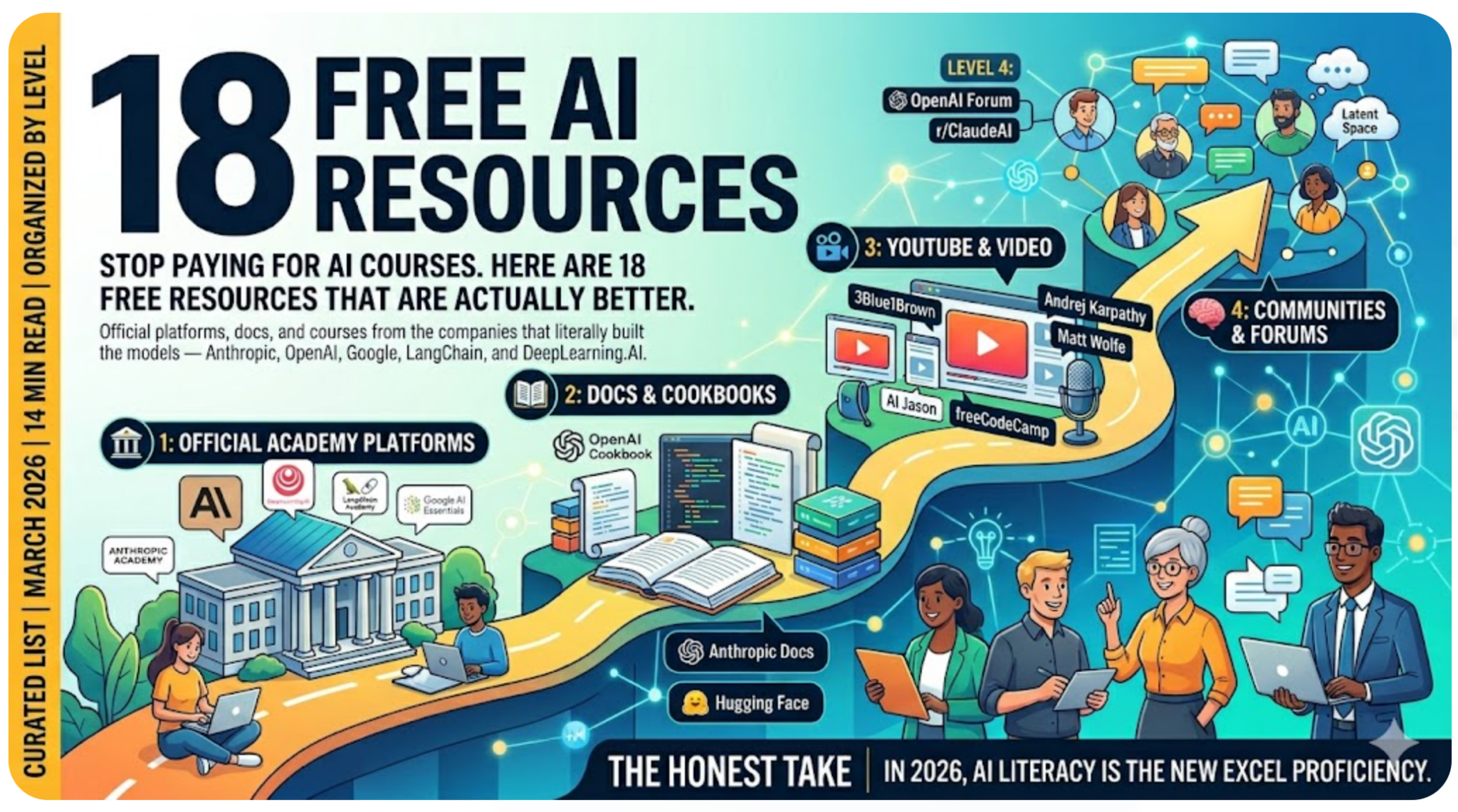
Stop Paying for AI Courses. Here Are 18 Free Resources That Are Actually Better.
Official platforms, docs, and courses from the companies that literally built the models — Anthropic, OpenAI, Google, LangChain, and DeepLearning.AI. All free. All high-quality. Most better than anything behind a paywall.
The Honest Take
The best AI education in 2026 isn’t behind a $500 bootcamp paywall. It’s sitting on the official websites of the companies that build the actual models — and most people don’t even know these resources exist. Anthropic teaches you Claude directly. OpenAI gives you production-ready cookbook code. LangChain’s founder teaches the LangChain course himself. This list is the result of going through dozens of free resources and keeping only the ones worth your time.
How This List Is Organized
🏛️ Official Academy Platforms — Structured courses from the source (#1–4)
📖 Documentation & Cookbooks — Learn-by-doing reference material (#5–9)
🎥 YouTube & Video — Visual learners and deep dives (#10–14)
🧠 Communities & Forums — Where practitioners actually talk (#15–18)
🏛️ Official Academy Platforms
Structured courses built by the teams that created the models. This is as close to “learning from the source” as it gets.
#1
Anthropic Academy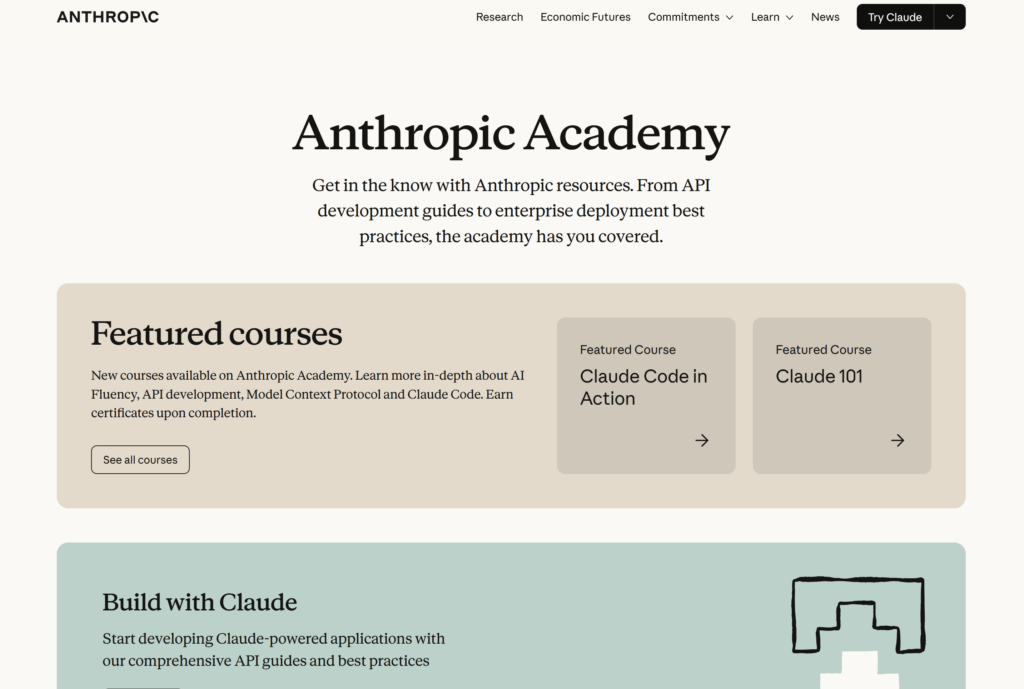
13 self-paced courses covering everything from basic AI literacy to production-level MCP server development. Co-designed with professors from Ringling College and University College Cork. Real, verifiable certificates on completion. No paid Claude subscription required.
Start here if: You use Claude at all, or want to. The “Claude 101” course takes 1–2 hours and immediately changes how you prompt.
Best courses: Claude Code in Action (21 lessons, ~1hr — covers CLAUDE.md, hooks, MCP, slash commands), the full API course (6–8 hours — the single best resource for building with Claude), and AI Fluency: Framework & Foundations (great for non-technical users).
#2
DeepLearning.AI Short Courses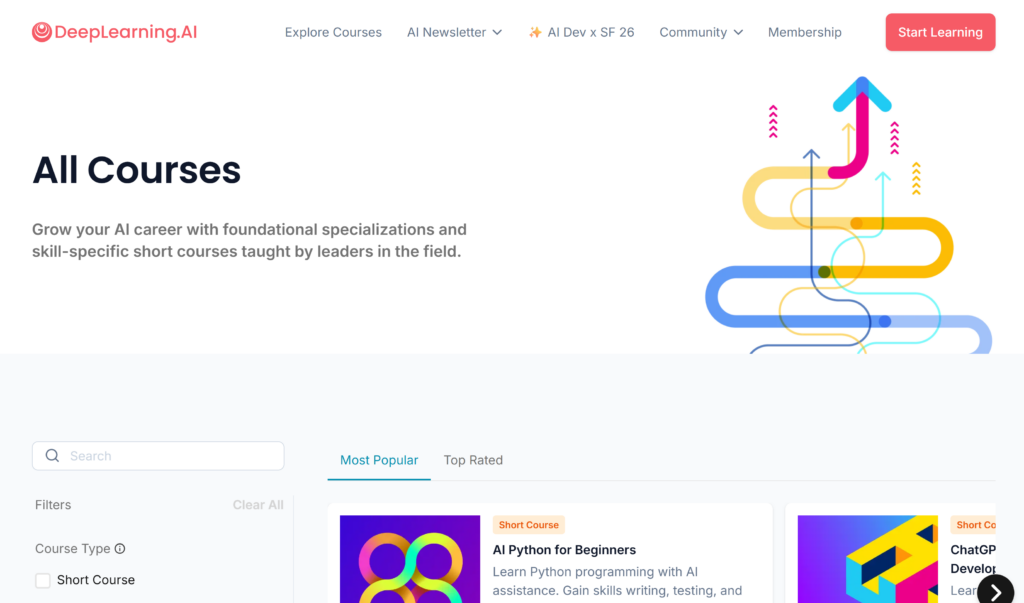
Andrew Ng’s platform has 88+ short courses, with 60+ focused on GenAI. Each runs 1–2 hours with hands-on Jupyter notebooks where you write real code. The secret: these courses are co-created with OpenAI, Anthropic, LangChain, and Google. The LangChain founder teaches the LangChain course. OpenAI engineers co-built the prompt engineering course. You’re learning directly from the people who build the tools.
Start here if: You want practical, code-along tutorials with zero setup (Jupyter notebooks run in-browser with pre-loaded API keys).
Best learning path: “ChatGPT Prompt Engineering for Developers” → “LangChain for LLM Application Development” → “Building Systems with the ChatGPT API” → “Multi AI Agent Systems with crewAI”.
#3
LangChain Academy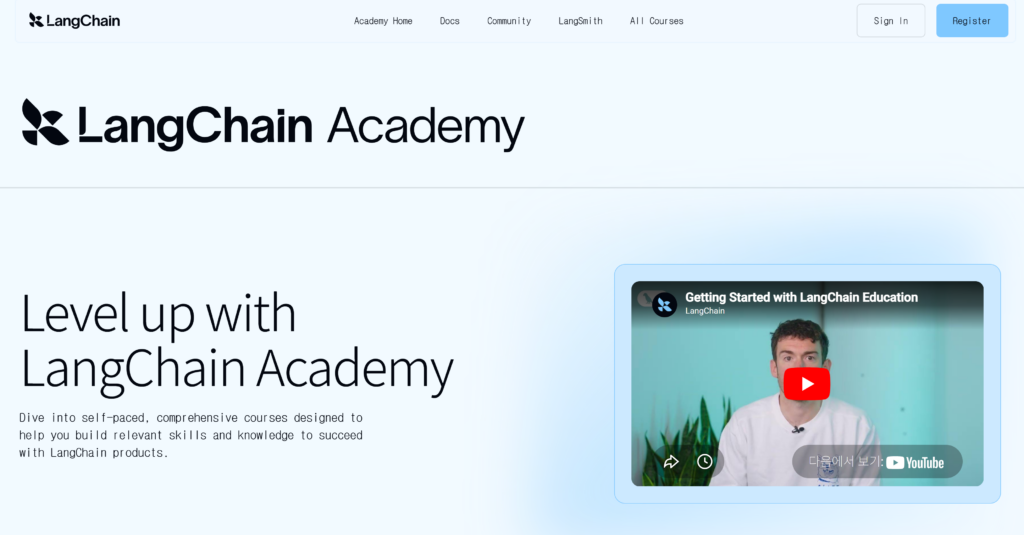
LangChain is the most-used framework for building AI applications, and their official academy is completely free. The courses cover LangChain core components, LCEL chains, RAG systems, LangGraph (for building stateful multi-agent workflows), and LangSmith (for evaluating and monitoring AI apps).
Start here if: You’re a developer who wants to build AI-powered applications, not just use AI chatbots.
Why it matters: LangGraph is the dominant framework for building AI agents in 2026. Learning it from the official source means you’re not fighting outdated tutorials or deprecated APIs.
#4
Google AI Essentials (Coursera)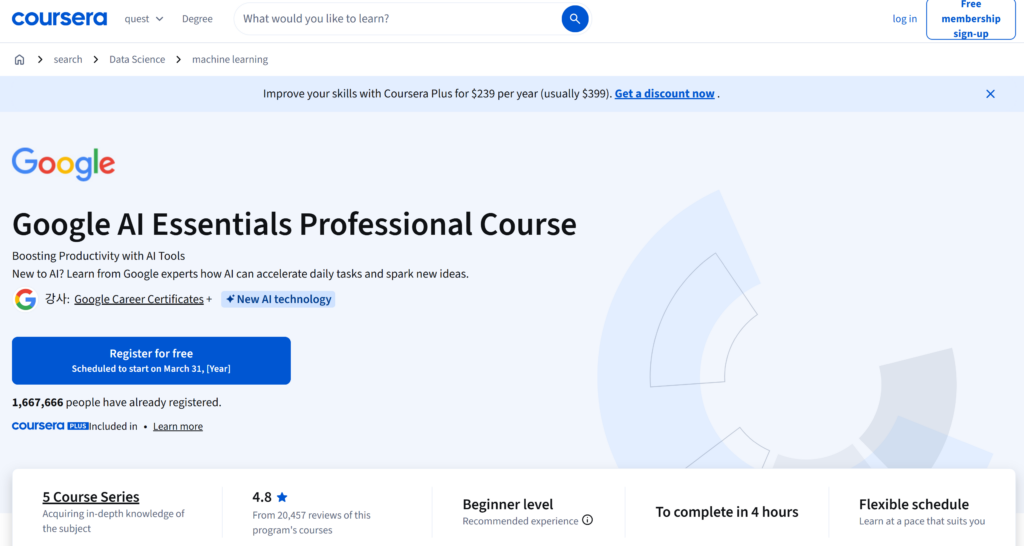
Google’s introductory course on generative AI explains the technology behind ChatGPT, DALL-E, and Gemini in plain language. It’s the fastest way to understand what’s actually happening in AI right now — without writing code. Separate from their more technical “Introduction to Generative AI” course on Google Cloud Skills Boost, which is also free.
Start here if: You want a big-picture understanding from one of the world’s leading AI labs, and you’re not interested in coding.
📖 Documentation & Cookbooks
This is where many paid courses secretly get their material. Cut out the middleman and go straight to the source.
#5
Anthropic Docs & Prompt Engineering Guide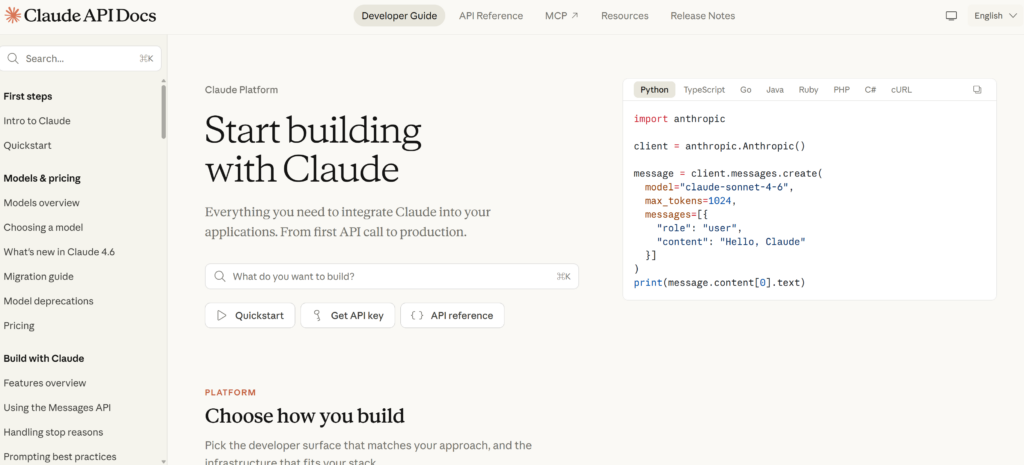
Anthropic’s official documentation isn’t just API reference — it includes one of the best prompt engineering guides available anywhere. The “Prompt Engineering” section alone covers system prompts, chain-of-thought, few-shot patterns, structured output, and real-world examples that most paid courses charge $200+ to teach. The “Claude Code” docs are equally thorough.
Hidden gem: The GitHub repository (github.com/anthropics/courses) has Jupyter Notebook-based hands-on tutorials for API fundamentals, prompt engineering, evaluations, and tool use — for developers who prefer running code over watching videos.
#6
OpenAI Cookbook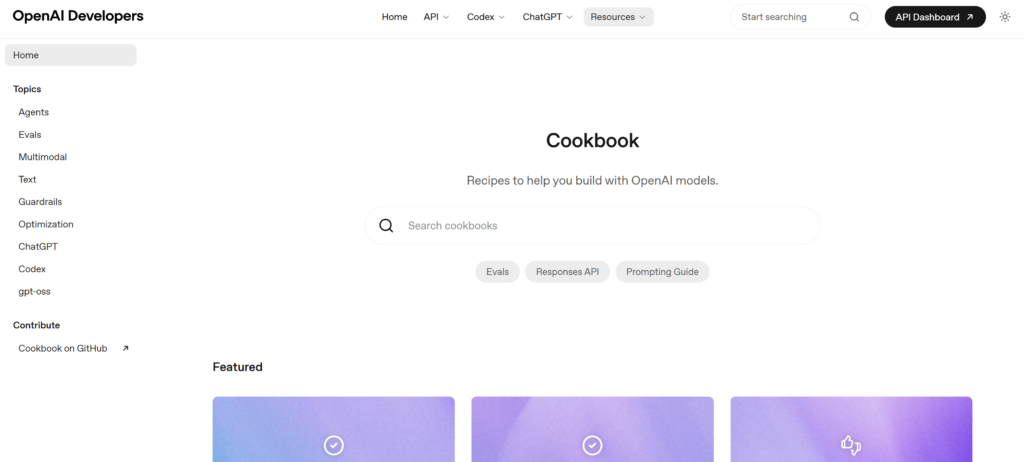
A massive collection of production-ready code examples maintained by OpenAI engineers. Covers everything from basic API calls to advanced patterns: RAG implementations, function calling, text-to-SQL, structured outputs, vision applications, embeddings, and multi-agent architectures. Each example is a complete, runnable notebook you can copy into your own projects.
Why it’s underrated: Most “AI coding tutorials” on YouTube are just reformatted versions of these notebooks. Go to the source and you’ll always have the latest API syntax.
#7
OpenAI Docs & Platform Guide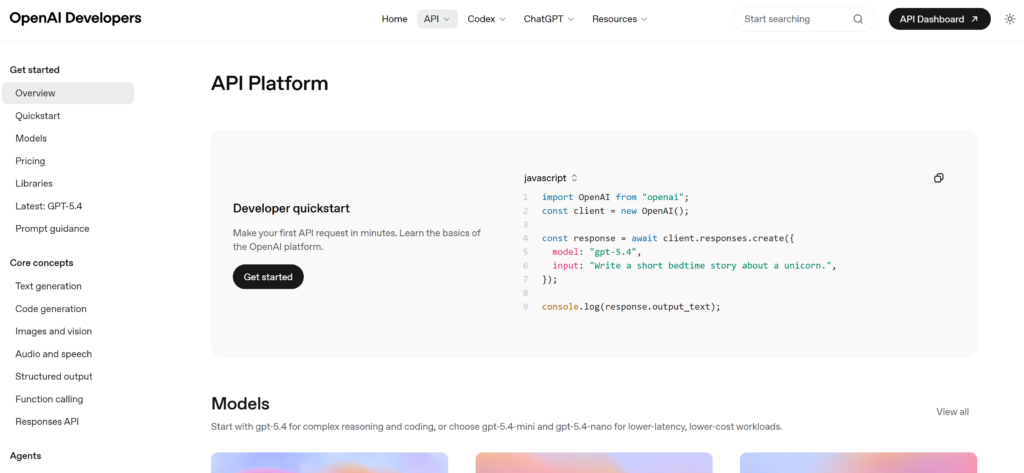
Beyond the Cookbook, OpenAI’s main documentation site is a comprehensive learning resource in itself. The “Guides” section walks through prompt engineering best practices, structured outputs, function calling, vision capabilities, and the Assistants API — each with working examples. The new Agents SDK documentation covers building production-grade AI agents from scratch.
Pro tip: The “Prompt Engineering” guide is one of the clearest explanations of how to get reliable results from any LLM — not just GPT models. The principles transfer directly to Claude, Gemini, and open-source models.
#8
Anthropic Prompt Library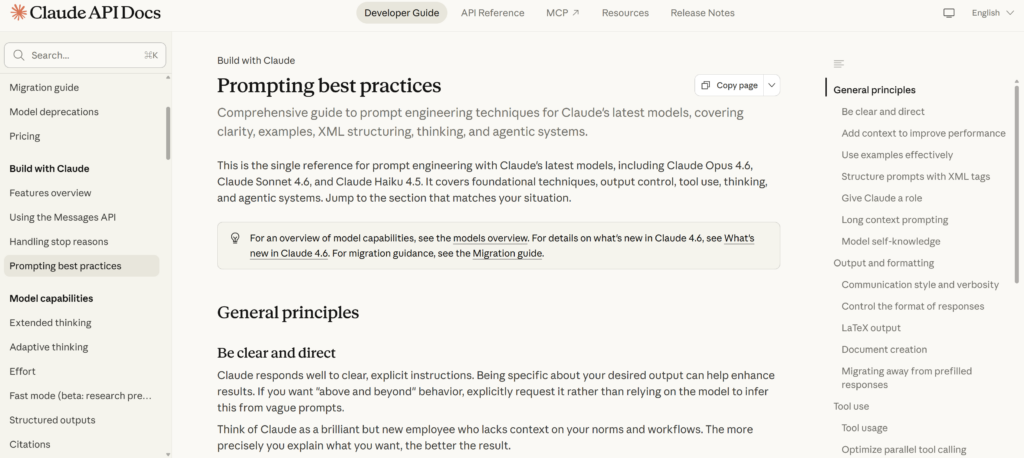
A curated collection of ready-to-use prompts for common tasks: data extraction, code review, meeting summarization, customer email responses, SQL generation, and more. Each prompt comes with a system message, example inputs, and expected outputs. It’s not a course — it’s a cheat sheet you’ll reference constantly.
How to use it: Don’t just copy-paste. Study the structure of each prompt to understand why it works. The patterns — XML tags, explicit output formatting, role definitions — transfer to any AI model.
#9
Hugging Face NLP Course & Open-Source Hub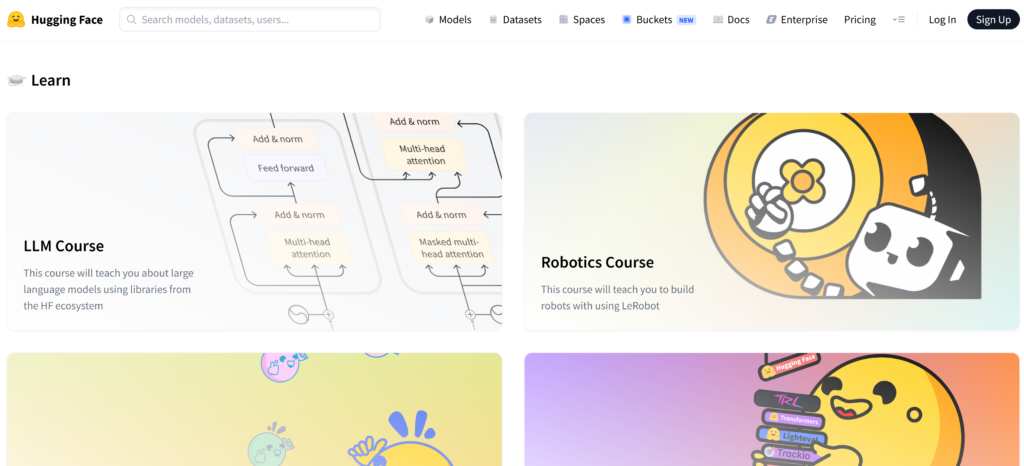
Hugging Face is the GitHub of AI models — hosting over 500,000 models, datasets, and demo apps. Their free NLP course teaches you how to use the Transformers library, fine-tune models, and build applications with open-source AI. If you want to go beyond API calls and understand how models actually work under the hood, this is the place.
Start here if: You’re interested in open-source AI, running models locally, or the more technical side of machine learning.
🎥 YouTube & Video Resources
For visual learners. These channels consistently produce high-quality, up-to-date content — not recycled clickbait.
#10
3Blue1Brown — Neural Networks Series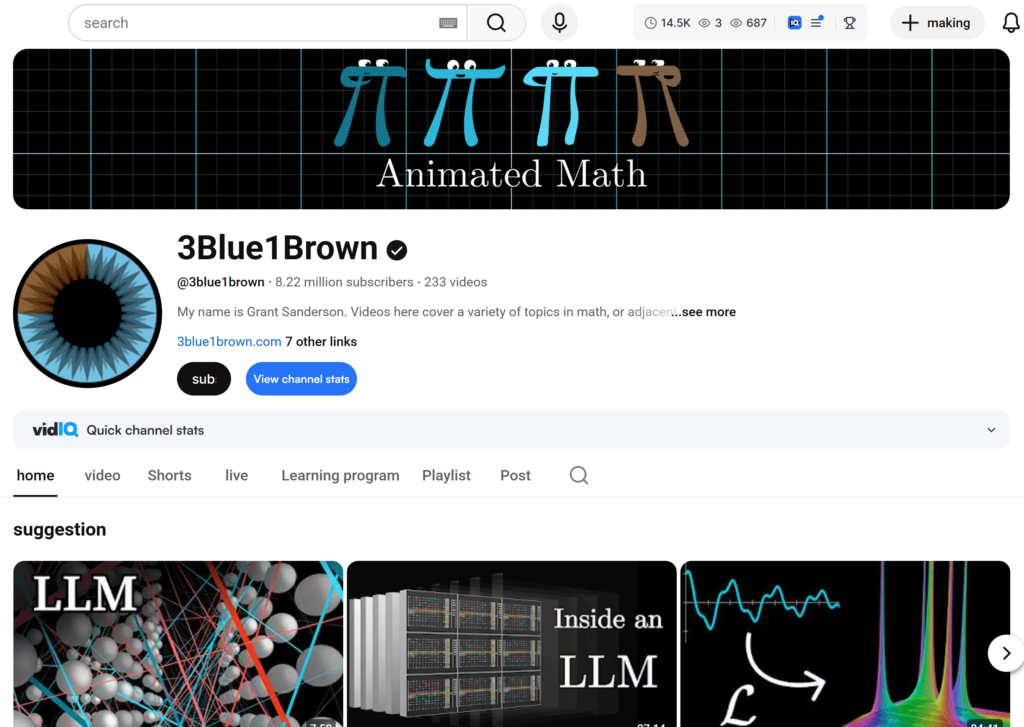
If you want to understand how AI actually works — not just how to use it — Grant Sanderson’s visual explanations of neural networks and transformers are unmatched. His “But what is a neural network?” series uses stunning animations to make concepts like backpropagation, attention mechanisms, and GPT architecture genuinely intuitive. You’ll never find a clearer explanation anywhere, paid or free.
Best for: Foundational understanding. Watch this before diving into any technical course — it makes everything else click.
#11
Andrej Karpathy — AI from First Principles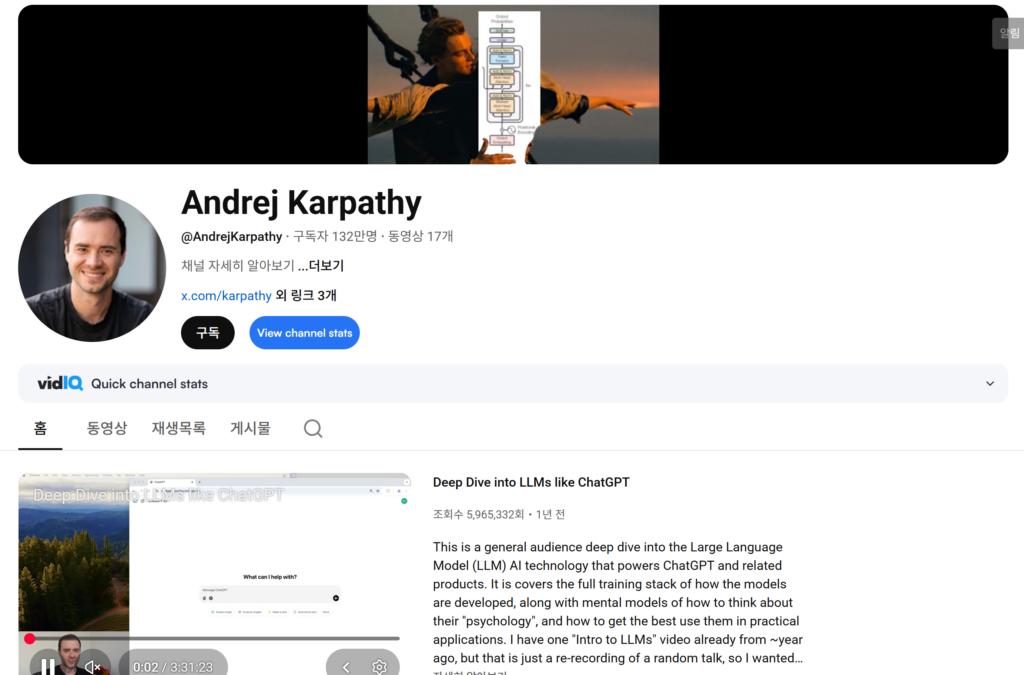
Former Director of AI at Tesla and founding member of OpenAI. Karpathy’s YouTube lectures — including “Let’s build GPT from scratch” and his “Neural Networks: Zero to Hero” series — are considered some of the best AI education content ever produced. His content is technical but remarkably clear. He also coined the term “context engineering” that’s now used industry-wide.
Best for: Developers who want to deeply understand what’s happening inside the models, not just interact with them through APIs.
#12
Matt Wolfe — AI News & Tool Reviews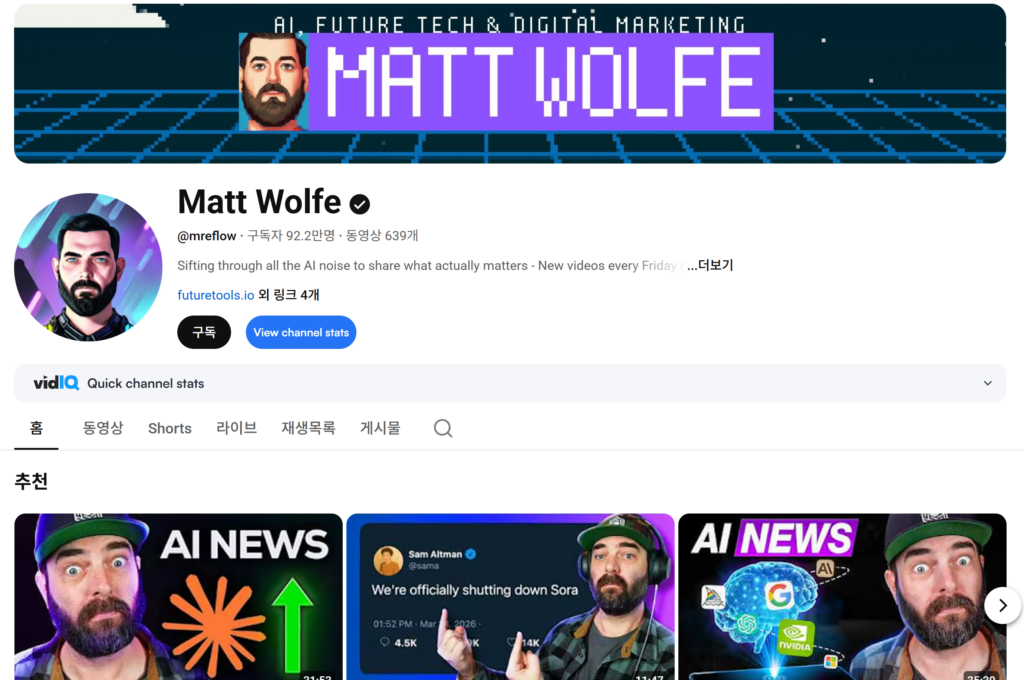
If you need to stay current with what’s happening in AI without spending hours scrolling X and Reddit, Matt Wolfe’s weekly roundups are the most efficient way to do it. He covers new tools, model releases, industry shifts, and practical tutorials. Less technical depth than Karpathy, but far more breadth and practical “what should I actually use?” recommendations.
Best for: Staying informed. Watch one video per week and you’ll know more about AI developments than 99% of people.
#13
AI Jason — Build-Along Tutorials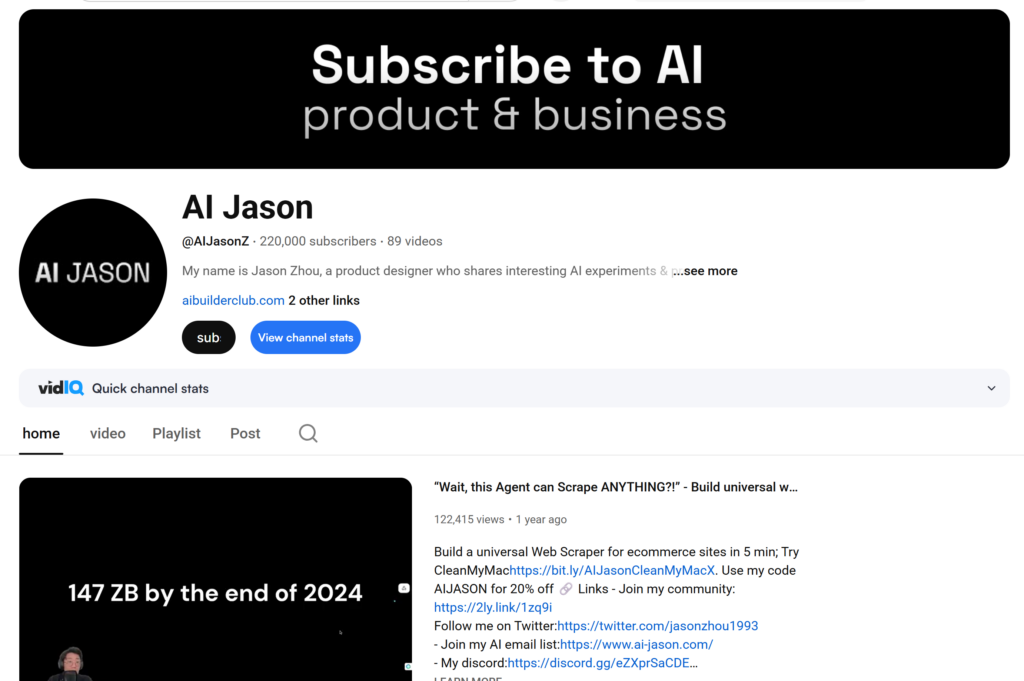
Focused on building real AI applications step by step. His tutorials on RAG systems, AI agents, and workflow automation are practical and code-heavy — you build alongside him and have a working project by the end of each video. One of the best channels for going from “I understand AI concepts” to “I can actually build something.”
Best for: Hands-on builders who learn by doing, not watching.
#14
freeCodeCamp — Full AI/ML Courses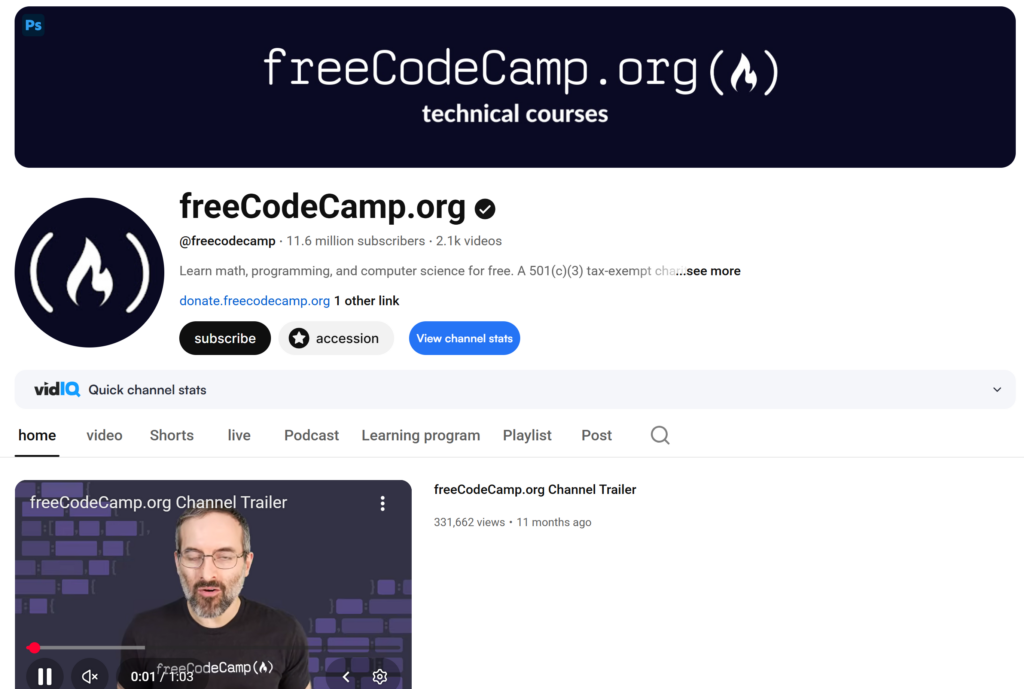
freeCodeCamp publishes full-length university-quality courses on YouTube — completely free. Their AI and machine learning catalog includes 4–10 hour courses on Python for AI, TensorFlow, PyTorch, LangChain, and generative AI fundamentals. Production quality rivals any paid platform.
Best for: People who want a structured, long-form course experience without paying for Coursera or Udacity.
🧠 Communities & Forums
Where practitioners share what actually works, debug real problems, and discuss what’s coming next. Courses teach you the basics. Communities keep you current.
#15
OpenAI Developer Forum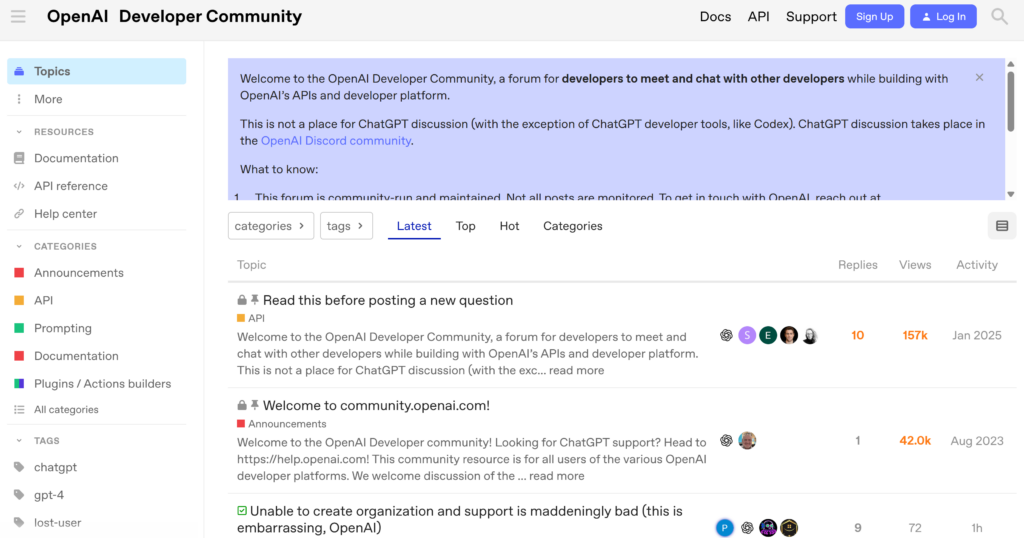
The official OpenAI community forum where developers share projects, troubleshoot API issues, discuss best practices, and get help from both community members and OpenAI staff. It’s a goldmine for practical problem-solving — chances are, whatever issue you’re running into, someone here has already solved it. New feature discussions and API change announcements often appear here first.
Best for: Getting unstuck on specific technical problems and staying ahead of API changes.
#16
r/ClaudeAI & r/ChatGPT (Reddit)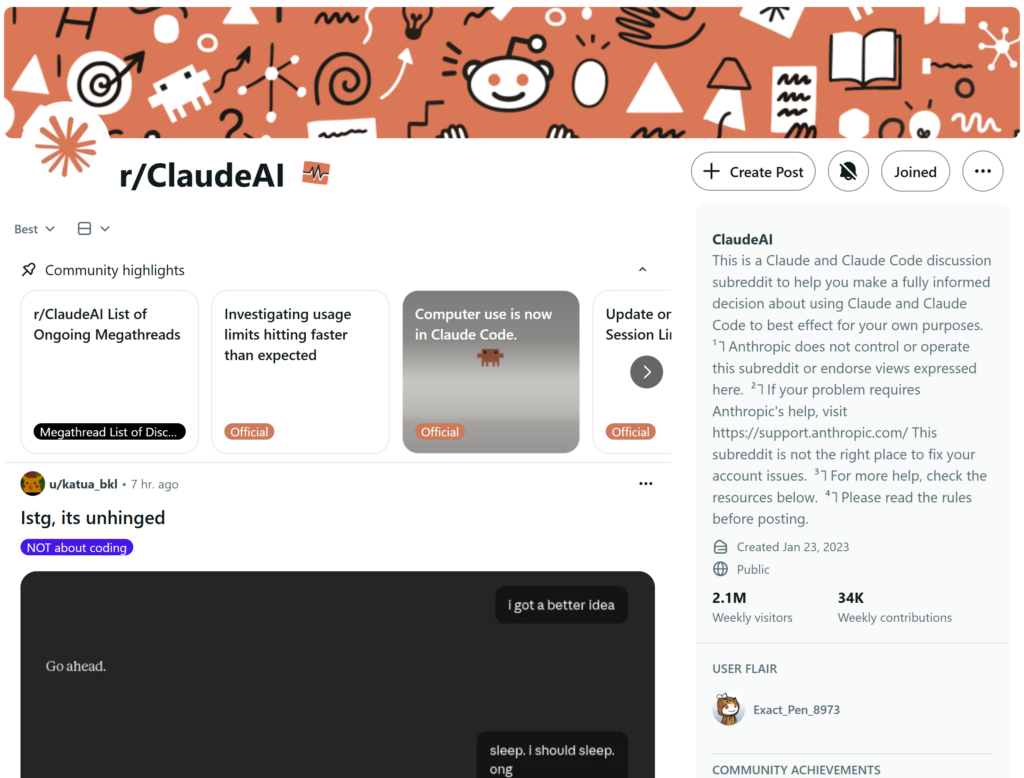
Reddit’s AI communities are where real users share unfiltered experiences — what works, what’s broken, clever workarounds, workflow ideas, and practical tips that never make it into official docs. r/ClaudeAI in particular has become a surprisingly high-quality community with deep discussions on Claude Code, Cowork, and advanced prompting techniques.
Best for: Real-world use cases, honest comparisons, and community-sourced tricks. Also great for discovering tools and workflows you’d never find on your own.
#17
Latent Space Podcast & Newsletter
The go-to podcast for AI engineers. Hosts swyx and Alessio interview the actual builders — engineers from OpenAI, Anthropic, LangChain, Vercel, and top startups. Conversations go deep into technical decisions, architecture patterns, and industry trends. The companion newsletter provides written summaries and analysis. This is where you learn what the best teams are actually doing in production.
Best for: Intermediate-to-advanced practitioners who want to level up from tutorials to real-world engineering decisions.
#18
Simon Willison’s Blog & TIL
Django co-creator Simon Willison has become one of the most respected voices in practical AI. His blog and “Today I Learned” notes cover every major AI model release with hands-on testing, honest assessments, and immediately useful code snippets. He doesn’t hype — he tests, measures, and shares what he finds. His coverage of Claude, GPT, and open-source models is some of the most balanced and technically grounded writing in the space.
Best for: Keeping up with what actually matters in AI without falling for marketing hype.
Which Path Should You Take?
“I’m completely new to AI.” Start with Google AI Essentials (#4) for the big picture → Then Anthropic Academy’s Claude 101 (#1) to learn by doing → Subscribe to Matt Wolfe (#12) to stay current.
“I use AI daily but want to go deeper.” Take the Anthropic Academy’s full API course (#1) → Work through the OpenAI Cookbook (#6) examples → Dive into DeepLearning.AI short courses (#2) for prompt engineering and RAG → Join r/ClaudeAI (#16) for real-world tips.
“I want to build AI applications.” DeepLearning.AI (#2) prompt engineering course → LangChain Academy (#3) for the framework → Anthropic & OpenAI docs (#5, #7) for API mastery → AI Jason (#13) for build-along projects → Latent Space (#17) for production architecture patterns.
“I want to understand the science.” 3Blue1Brown (#10) for visual foundations → Andrej Karpathy (#11) for building from scratch → Hugging Face (#9) for hands-on ML → Simon Willison (#18) for staying grounded.
Why free resources are often better than paid courses in 2026
AI moves too fast for traditional courses. By the time a $500 bootcamp records, edits, and publishes their curriculum, the APIs have changed, new models have launched, and the best practices have shifted. The official docs and cookbooks from Anthropic, OpenAI, and LangChain update in real time because they have to — their own products depend on it.
The companies that build the models have every incentive to teach you to use them well. More skilled users = more API revenue = more growth. That’s why the quality is so high and the price is zero. Take advantage of it.
The Bottom Line
In 2026, AI literacy is the new Excel proficiency. If you don’t have it, you’re getting filtered out before the interview. The good news is that the best education is completely free — and it’s built by the same people who build the models you’ll be using.
Don’t spend $500 on a bootcamp. Don’t pay for a course that’s just a reformatted version of the official docs. Start with one resource from this list today, spend an hour with it, and build from there. Bookmark this page and come back whenever you need the next step.
Related free AI guides
- How to Get Free Claude API Credits in 2026
- Get Google AI Pro Free for 4 Months
- Run Local LLMs for Free with Ollama + Qwen